
Room for Love: A New Website for a Mission That Makes a Difference
How a New Hampshire nonprofit's website transformation brought its mission, community, and opportunities to give together in one place.
Some businesses and organizations are especially easy to get excited about working with. Not because of what they sell or how big they are, but because of the difference they're making.
Room for Love is one of those organizations.
This New Hampshire nonprofit creates personalized bedrooms for children facing health challenges, special needs, economic hardship, or other difficult circumstances. With the help of volunteers, designers, local businesses, and community supporters, they transform ordinary bedrooms into spaces where kids can feel safe, comfortable, and, most importantly, loved.
When Room for Love needed a new website and visual identity, the goal was about much more than updating colors and rearranging pages.
It was about creating an online home that reflected the heart of the organization and made it easier for people to be part of its work.

A little more about Room for Love
Think about how much time children spend in their bedrooms.
It's where they sleep, play, dream, recharge, and find a little privacy. For a child navigating a serious illness, a disability, or difficult circumstances at home, having a space that feels entirely their own can mean even more.
Room for Love works with families to create bedrooms that reflect each child's personality, interests, and needs.
And these aren't simply decorating projects.
They're community efforts. Volunteers contribute their time, local businesses provide materials and services, and supporters help make each transformation possible.
The finished rooms are beautiful, but the real story is about the children and families who get to enjoy them.
You can learn more about the organization and its work at Room for Love.
A website that reflects the mission behind the work
Room for Love already had a website, but as the organization continued its work, there was an opportunity to create something that better represented its identity and gave visitors a clearer picture of what it does.
We started by looking at the bigger picture.
Who visits the website? What are they hoping to find? And what does Room for Love need its website to help accomplish?
For a nonprofit, those questions are especially important because not everyone arrives with the same goal.
Someone might be learning about the organization for the first time. Someone else might want to nominate a child, volunteer, sponsor a project, or make a donation.
A successful website needs to welcome all of them without making anyone work too hard to figure out where to go.
That thinking shaped the redesign.
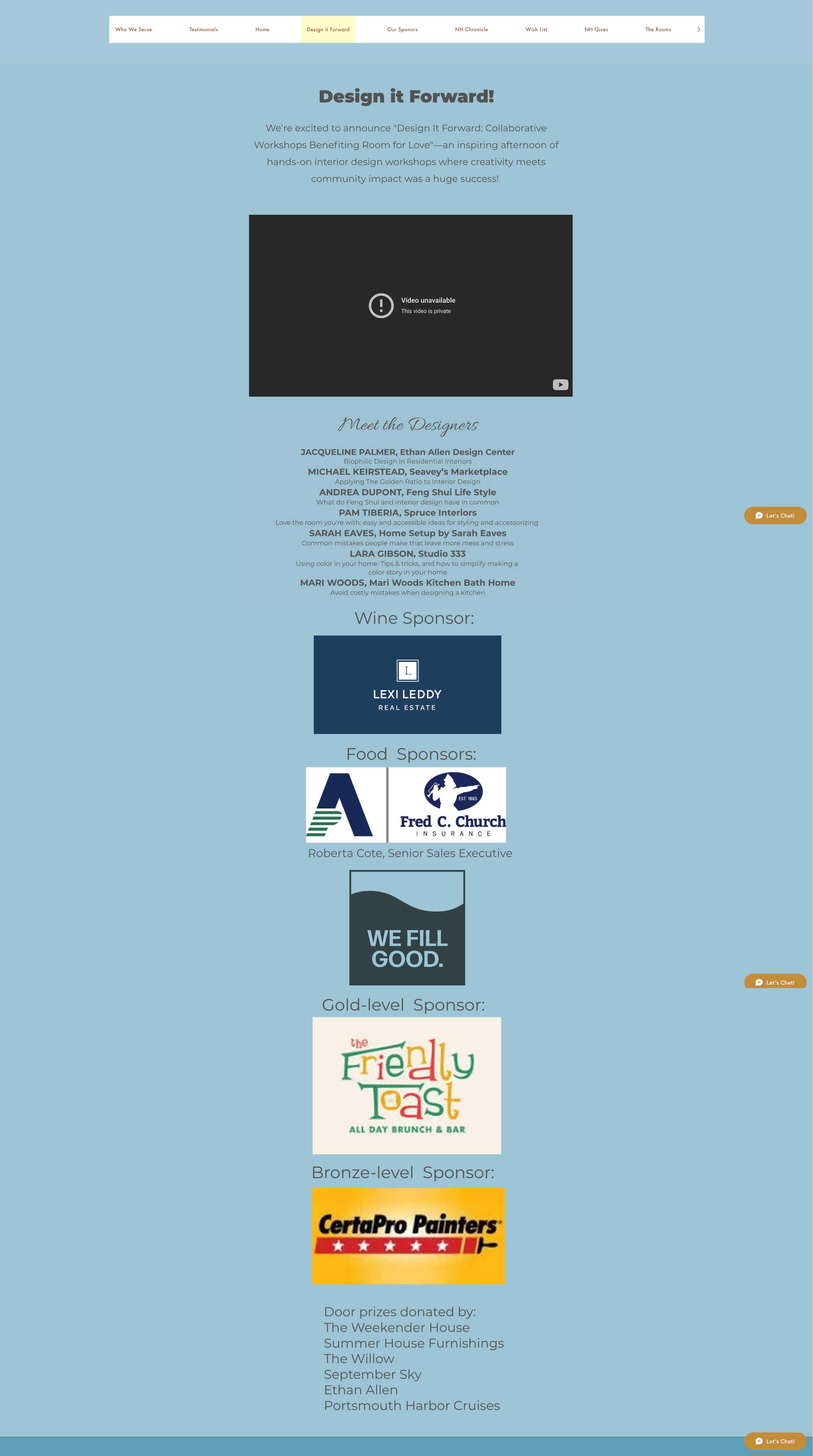
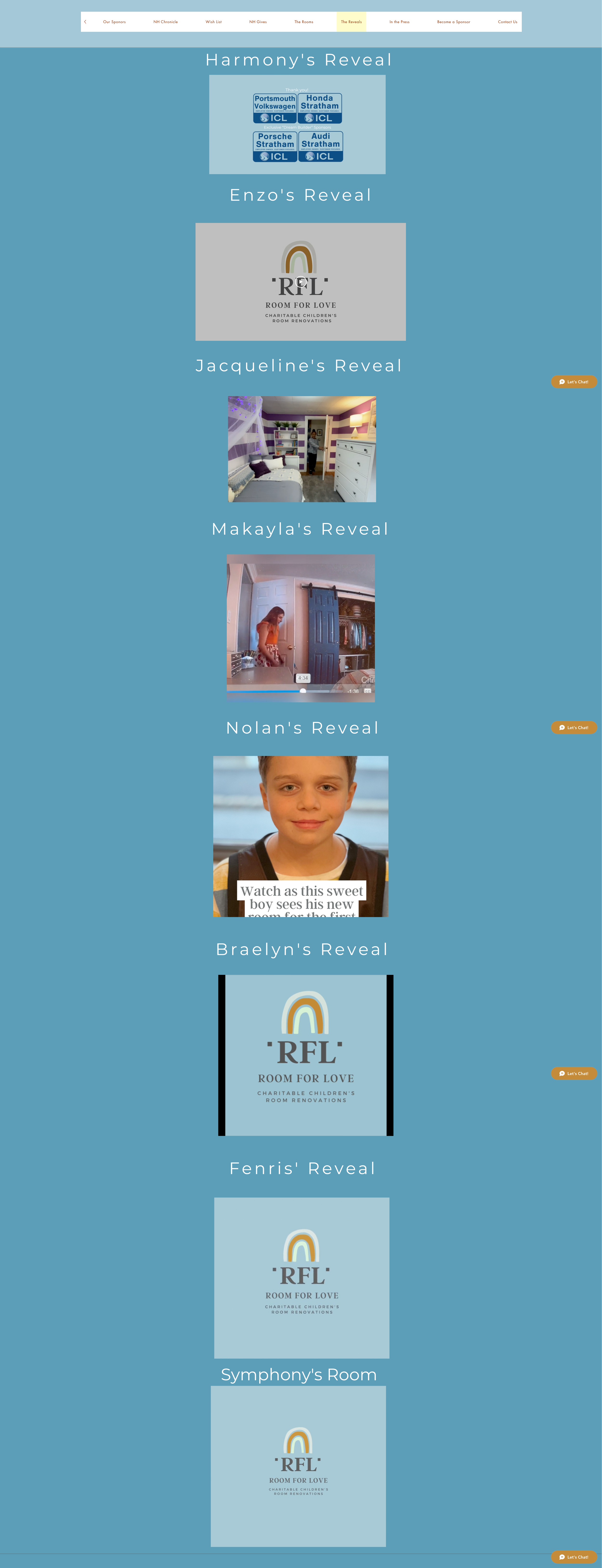
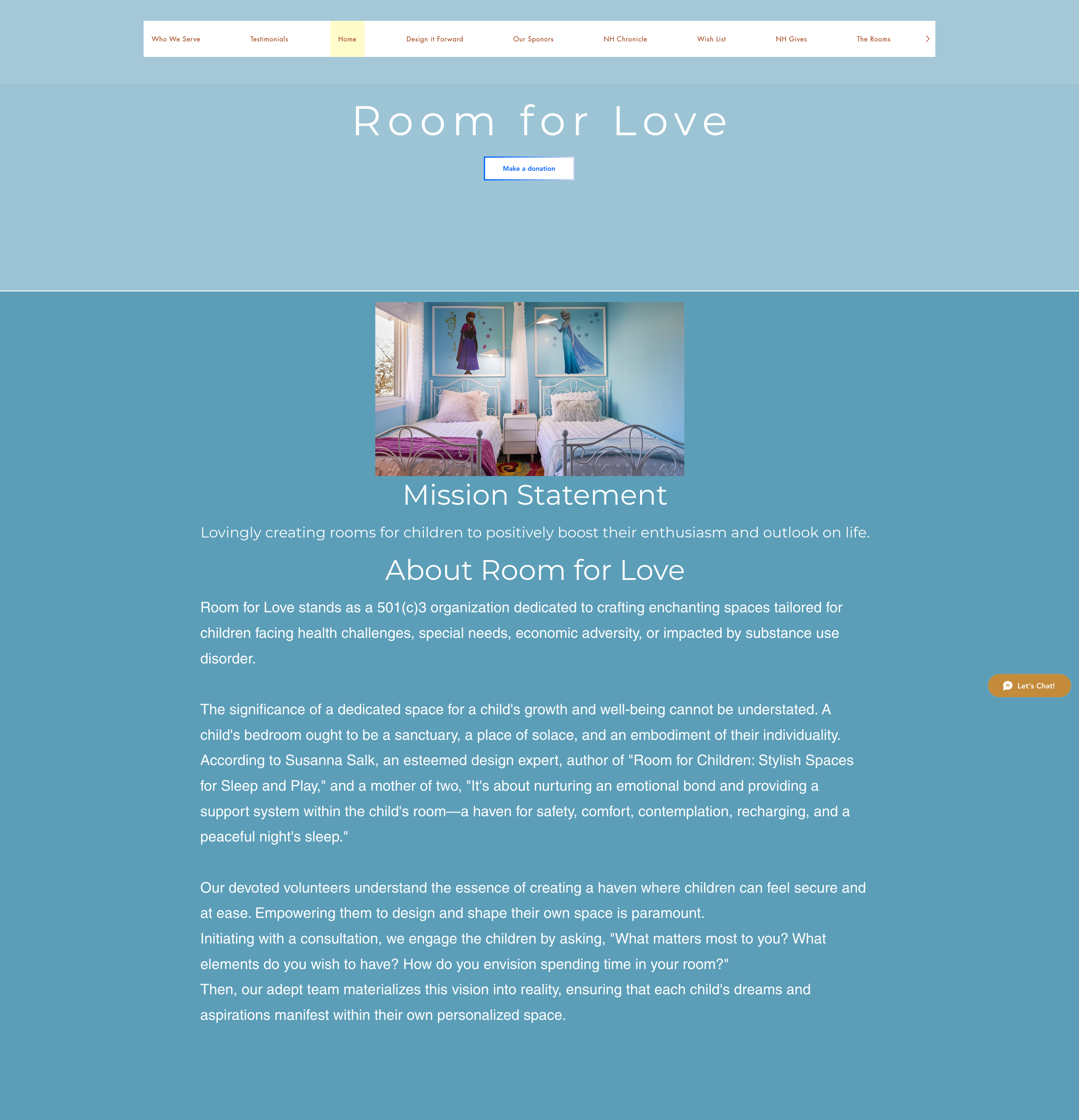
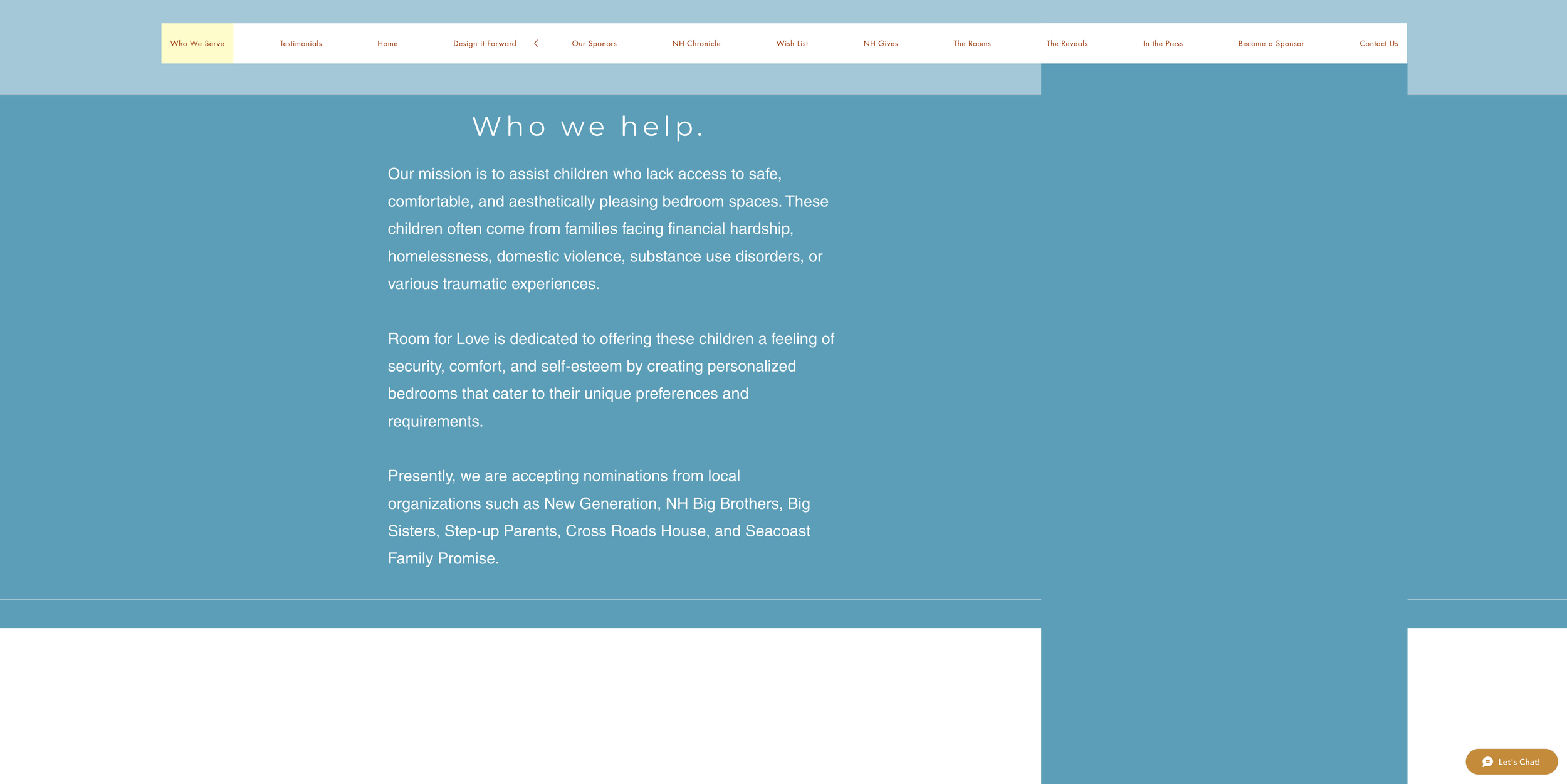
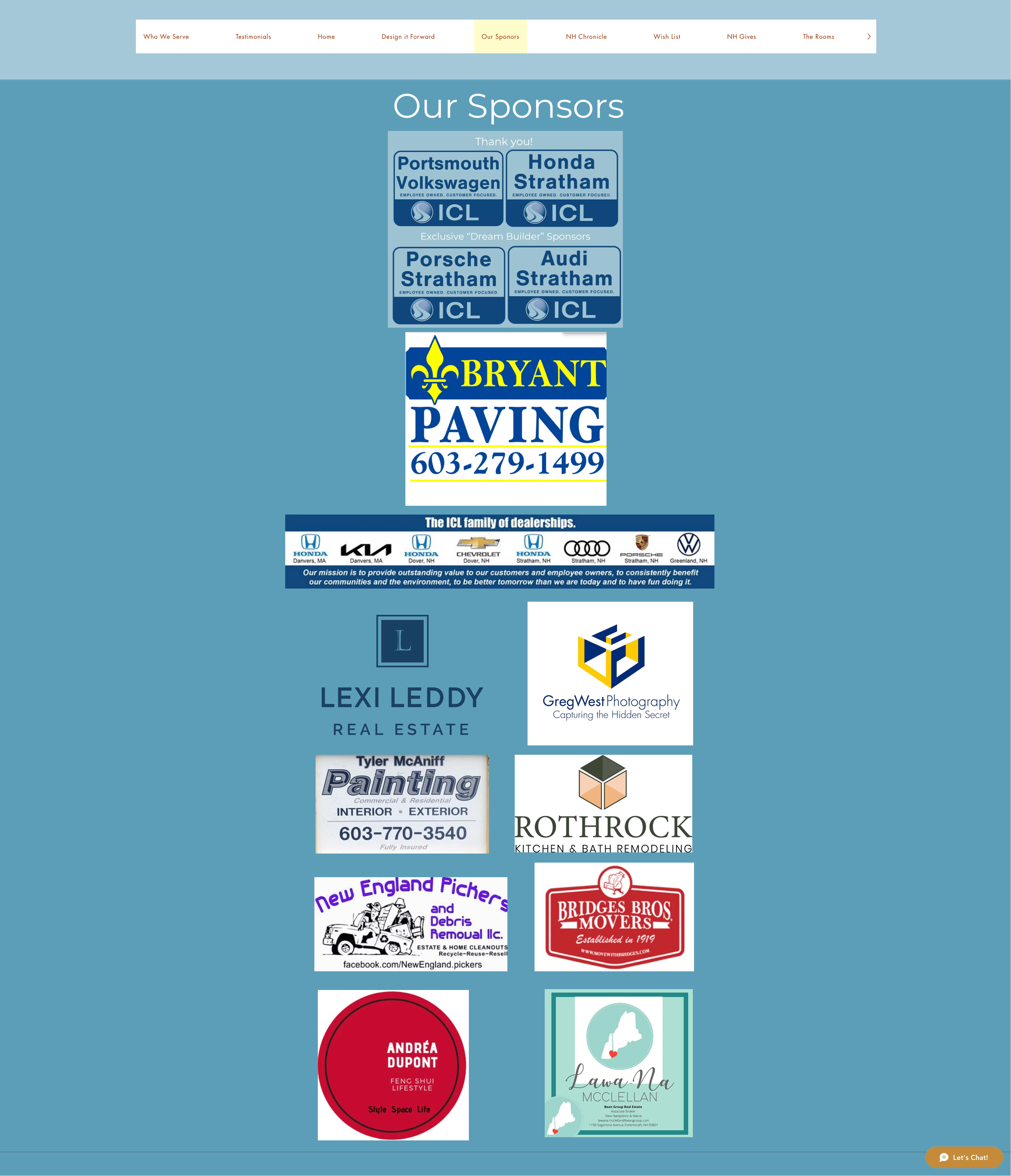
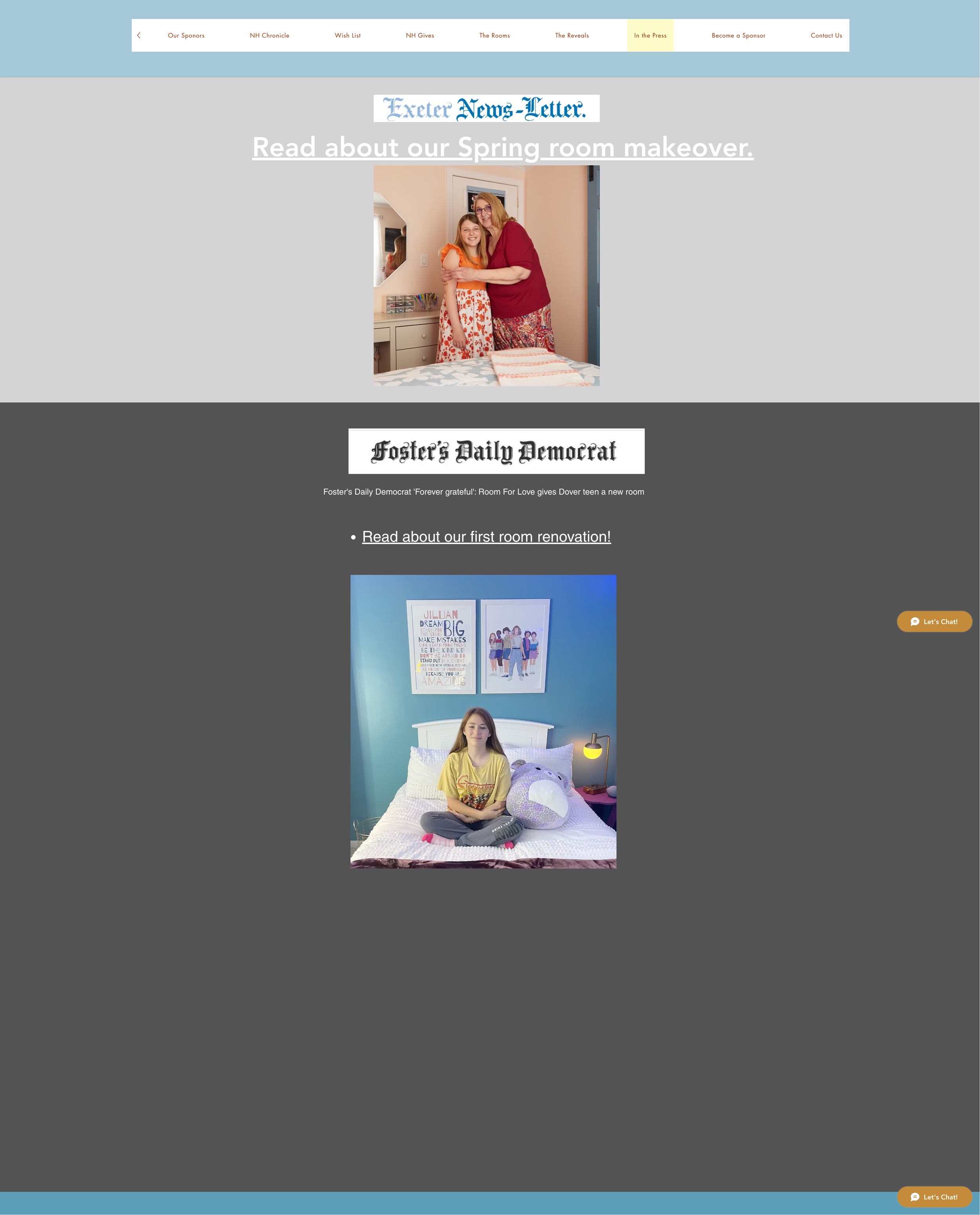
Screenshots of the website Room For Love was using when we started working together.
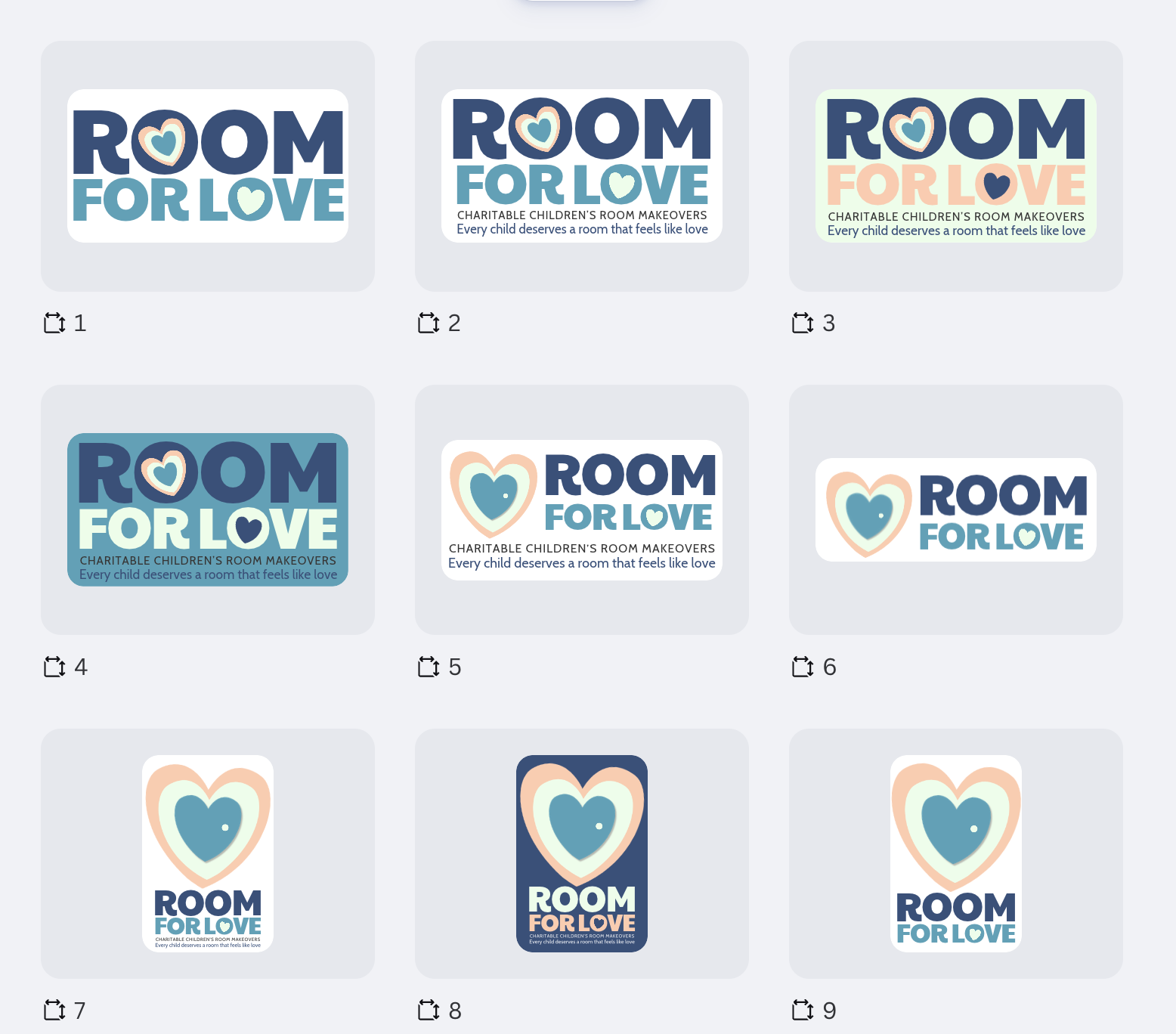
Bringing Room for Love's personality into its branding
One of the first pieces of the project was developing a new logo and visual identity.
Room for Love's work is rooted in kindness, creativity, community, and a genuine desire to make children feel cared for.
The branding needed to reflect those qualities.
We developed a warm, welcoming identity with a heart at its center, creating a recognizable look that could carry through the website and other materials.
The new design brings together soft colors, approachable typography, and a sense of the curated spaces that make Room for Love special.
It's friendly without feeling childish and polished without losing its personality.
Because a nonprofit's brand doesn't need to look corporate to be professional.
It needs to feel like the organization behind it.
Making the mission easier to understand
One of the biggest priorities for the new website was helping visitors understand Room for Love's purpose almost immediately.
When someone arrives on a website, they shouldn't have to dig through several pages to figure out what an organization does.
The redesigned homepage introduces Room for Love's mission, explains who it serves, and gives visitors a glimpse of the community behind the transformations.
Photography plays an important role here.
Images of completed bedrooms, volunteers, families, and community events help tell a story that words alone can't fully communicate.
We also reorganized the content to make it easier to explore the organization, meet the people involved, and find opportunities to participate.
The result is a website that gives the mission room to shine.
And that's a useful lesson for any business or nonprofit.
Your website shouldn't make people work to understand why you exist or how you can help them.
Giving every room transformation a place to shine
One of my favorite parts of this project was creating a better way for Room for Love to share its completed bedrooms.
Every room has a story.
There's the child who inspired it, the people who helped bring it together, and the transformation from an ordinary space into something personal and meaningful.
Those stories deserve more than a few photos tucked away on a page.
We created dedicated room-reveal page templates that give the organization a consistent way to showcase its projects.
The templates provide space for before-and-after photography, room details, stories, videos, and recognition of the people and businesses who contributed.
They also make it easier to add new projects as more rooms are completed.
That last part matters.
A website isn't something you build once and never touch again. It should be designed to accommodate the work an organization will continue doing.
For Room for Love, that means having a place to celebrate each new transformation and recognize the community that made it possible.
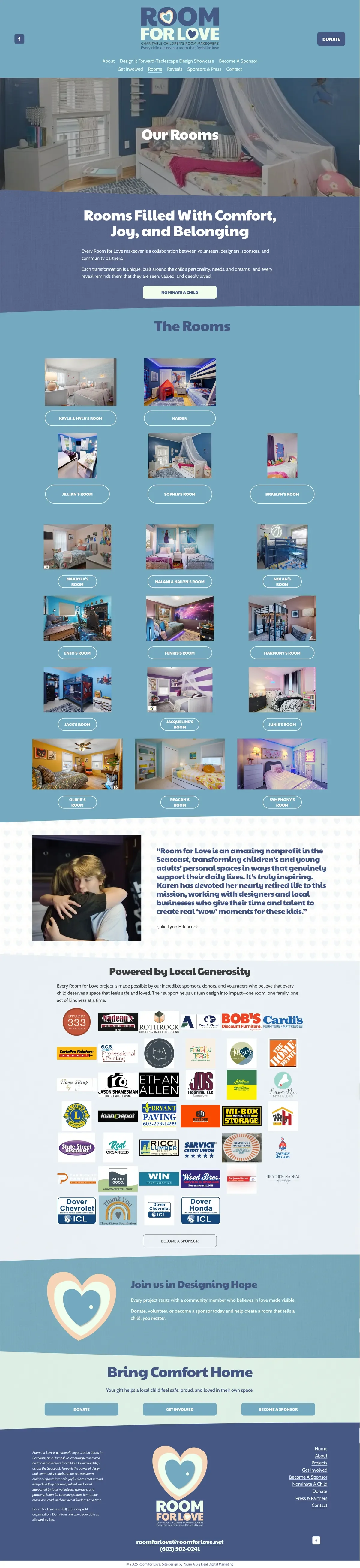
Making it easier for the community to get involved
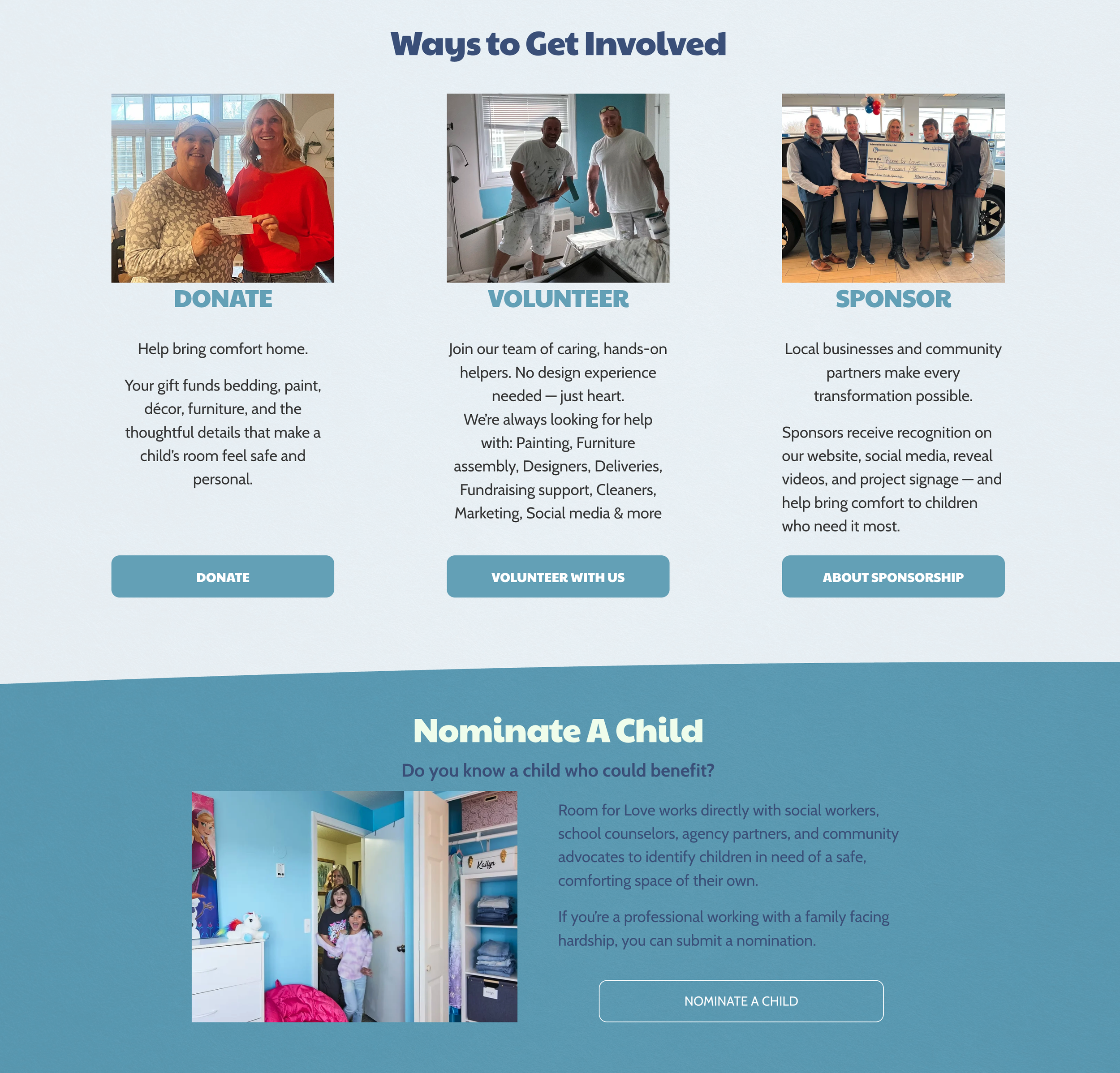
Room for Love's work depends on the generosity of volunteers, sponsors, and community supporters. The website needed to make it easy for people inspired by the mission to find a way to help and get involved.
We incorporated on-site donations, a wishlist, and clearer opportunities to volunteer, sponsor a project, or contribute resources.
We also moved the website from Wix to Squarespace, creating reusable templates for room reveals and a consistent design that makes it easier for the organization to share new projects, recognize supporters, and keep information current.
The goal was a website that could grow alongside Room for Love without becoming difficult to maintain.
More than a website makeover
There's a lesson here for businesses and nonprofits alike. A website should do more than look good. It should tell your story, reflect your personality, help visitors find what they need, and make the next step obvious.
For Room for Love, that means connecting families, volunteers, donors, and sponsors with a mission that brings comfort and joy to children who need it.
For another organization, it might mean making it easier to book an appointment, request a quote, or purchase a product.
The details change, but the goal is the same: a website that supports the work you're doing, rather than creating more work for you.
A little love goes a long way
One of my favorite parts of working with local businesses and nonprofits is getting to know the people and purpose behind them.
Room for Love is a wonderful example of what a community can accomplish together. I'm glad YABD had the opportunity to help bring its mission to life through new branding and a website designed to support its work.
If you'd like to learn more about this New Hampshire nonprofit, explore Room for Love's website. You might even find a way to get involved.
Your website should work for your mission, too.
Whether you're running a nonprofit, building a small business, or growing something you've poured years of work into, your website should reflect what makes it worth caring about.
At You're A Big Deal, I help independent business owners and organizations bring their ideas together through thoughtful website design, branding, photography, and marketing.
If your website isn't telling your story the way you'd like it to, let's talk.
Frequently Asked Questions About Nonprofit Website Design
-
Update important information whenever it changes, and give the overall site a quick review at least one a year.
You don't need to constantly change a website that is accurate and working well.
-
Squarespace can be a good fit for small and growing nonprofits that want a professional website they can maintain without extensive technical knowledge. It supports content updates, image galleries, forms, and integrations that can help organizations manage their online presence.
The right platform depends on the organization's specific needs, particularly when it comes to donations, fundraising tools, and other specialized functionality.
-
Consistent branding helps an organization become recognizable and communicate its personality and values. A cohesive logo, color palette, typography, photography, and messaging can make a nonprofit's communications feel more connected, whether someone encounters the organization on its website, social media, or printed materials.
-
Make opportunities to participate visible and easy to understand. Visitors should be able to find information about donating, volunteering, sponsoring, or attending events without searching through multiple pages. Sharing real stories and photographs also helps people understand the work their support makes possible.
-
A nonprofit should update its website whenever important information changes and regularly add relevant news, projects, events, or other content. It also helps to periodically review navigation, links, and calls to action.
For more on keeping a website current, read How Often Should You Update Your Small Business Website?